What if the room is right?
By Marc Winn
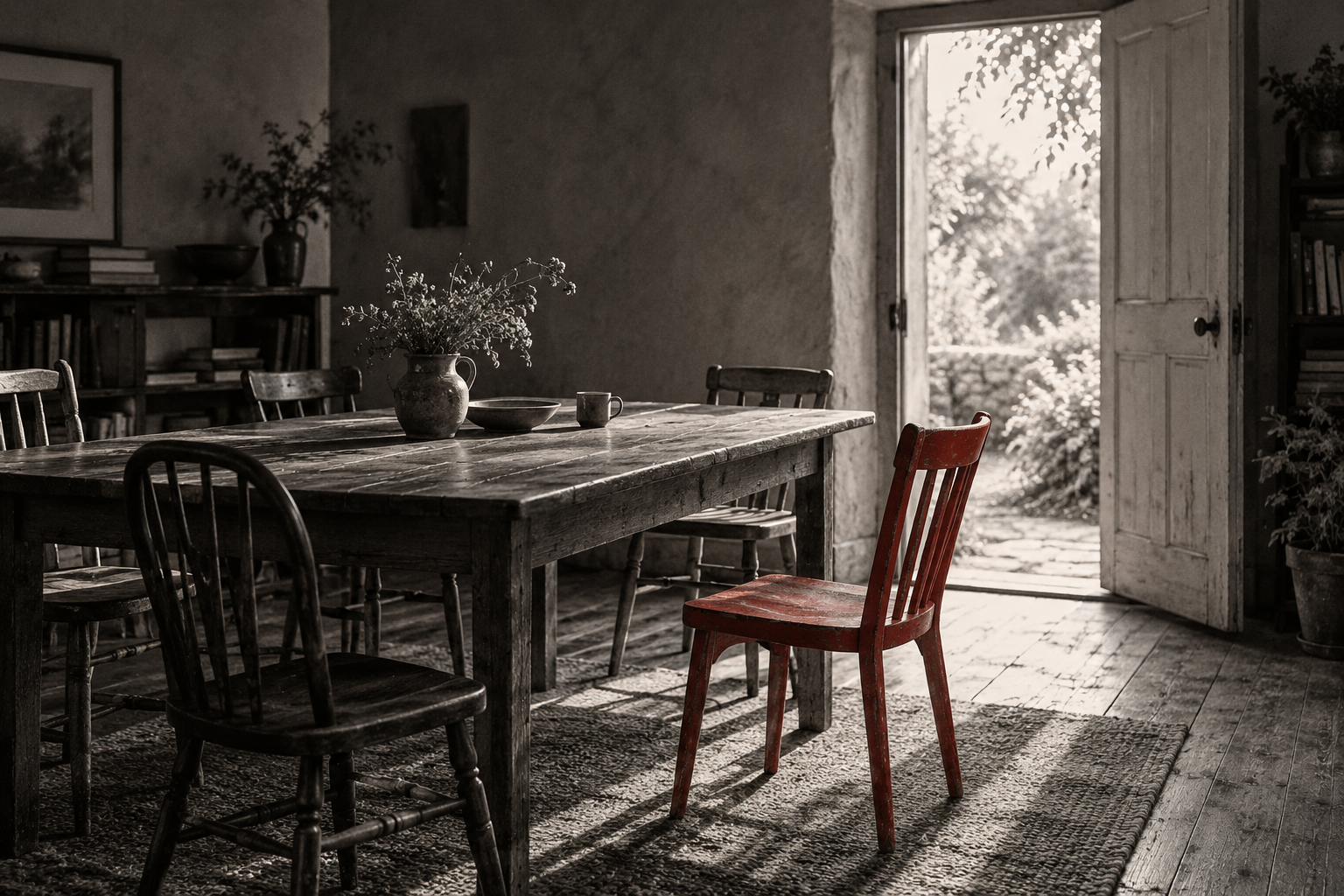
Put ten nodding people around an imaginary table and I can already hear the part of me that wants to interrupt.
What have we missed?
It is a useful question. It is also a wonderfully reliable way of making sure the room notices that I am in it.
In April, I wrote about the difference between reacting against something and thinking independently. I am not sure that distinction is as comfortable as I made it sound.
If everybody turns left and I automatically turn right, the crowd is still choosing my direction. I have simply arranged to receive the instructions backwards.
There is something faintly embarrassing about that. The independent thinker, waiting for everyone else to decide where he should not go.
I don't want to lose the instinct to question things. There are arrangements that become invisible through familiarity. Someone has to notice that the door opens the other way, or that nobody remembers why the meeting exists.
But I can imagine becoming so fond of that role that I start needing the room to be wrong.
Then agreement becomes suspicious. An ordinary answer feels like a disappointing use of my talents. There ought to be a hidden connection, a missing assumption, something I can turn upside down.
Perhaps there is.
Perhaps the people nodding have already thought about it.
That possibility is less flattering. It gives me nothing to reveal. I might have to listen to a perfectly sensible explanation and say, yes, I think you're right.
No small revolution. No interesting new frame. Just a person joining a conversation.
I wonder whether being known for a way of seeing can eventually make some things harder to see. If I am the person who finds another possibility, can I recognise the moment when another possibility is not what is needed?
Sometimes the plan might be good enough. Sometimes the familiar thing might be loved for a reason. Sometimes somebody may need company rather than a different perspective on their predicament.
I don't think this makes curiosity less important. It makes me curious about what I am protecting when I disagree.
The thought? The person? Or the reassuring outline of myself?
There is another trap here, of course. I could turn all this into a more sophisticated contrarian performance. Disagree with disagreement. Announce that the truly independent thinker now agrees with everyone.
That should confuse the seating plan.
What I am reaching for is less impressive than that. The freedom not to know my position before I have heard the thing.
To be surprised by a good reason. To like something obvious without apologising for it. To leave a perfectly serviceable idea the right way up.
I would still like to notice the door nobody else has seen.
I would also like to be able to walk through the one they have kindly opened.
Reader responses
Be the first to respond.